Lagos is one of the most consistent property markets in the Algarve, but it is also one of the most misunderstood.
If you are researching property for sale in Lagos Portugal, planning relocation to the Algarve, or analysing the Lagos property market in 2026, there are several assumptions that regularly lead buyers in the wrong direction.
We work daily with buyers from the UK, Netherlands, Germany, Ireland and the US. Many arrive with expectations shaped by headlines, holiday impressions, or online yield projections.
Below are some of the most common misconceptions we see about the Lagos property market, and what the on-the-ground data shows instead.
1) “Lagos Property Prices Will Drop If I Wait”
Search trends for “Lagos Portugal property prices” spike whenever interest rates rise. The assumption is that prices must fall.
Historically, Lagos has not behaved like a speculative oversupply market.
Unlike parts of Spain that experienced large-scale overbuilding post-2008, Lagos faces structural supply constraints:
- Limited development land inside the town boundary
- Strict coastal and environmental building controls
- Height restrictions near the shoreline
- Slow municipal planning approvals
Prime areas such as:
- Porto de Mós
- Praia da Luz
- Lagos Marina
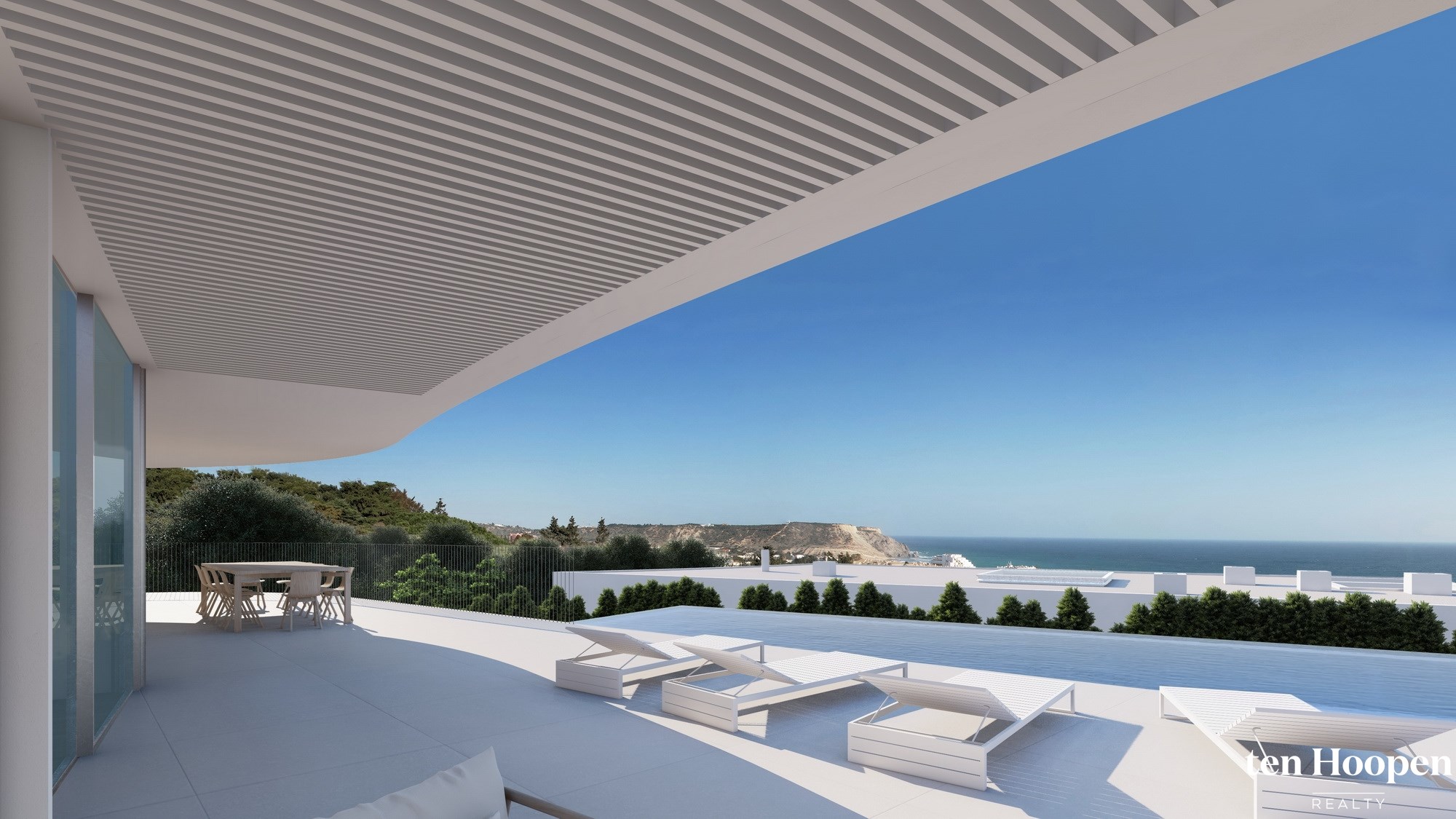
have very limited new sea-view stock entering the market.
Over the past five years, average asking prices per m² in Lagos have increased steadily, particularly for modern, energy-efficient apartments and contemporary villas.
Negotiation periods may lengthen. But structural supply-demand imbalance remains intact.
2) “Holiday Rentals in Lagos Will Easily Cover My Mortgage”
Many buyers search for “Lagos Portugal rental yield” before purchase.
Gross yield projections online rarely account for vacancy, maintenance and management costs.
Lagos is a lifestyle-led market with rental potential, not a guaranteed high-yield investment location.
Typical long-term rental returns for modern apartments in Lagos generally sit in the region of 3–4.5% gross yield, depending on location, purchase price and year-round tenant demand.
Well-positioned short-term rental properties can in some cases achieve 5–7% gross yield, but only where occupancy remains strong, management is efficient, and the property offers the features holiday renters prioritise most, such as walkability, outdoor space, parking and modern energy performance.
3) “Lagos Old Town Property Is Always a Bargain”
The Lagos Old Town attracts strong lifestyle interest.
However, buyers often underestimate:
- Renovation costs (€800–€1,500 per m² depending on scope)
- Façade preservation and heritage rules
- Limited parking
- Restricted construction access
Liquidity differs as well.
Modern apartments with lift access, underground parking and strong energy ratings typically resell faster than character properties without practical amenities.
4) “Praia da Luz and Lagos Town Perform the Same”
Praia da Luz and central Lagos operate as connected but distinct micro-markets.
Praia da Luz typically attracts:
- Full-time Northern European residents
- Larger plot villas
- Quieter winter lifestyle
Central Lagos attracts:
- Walk-to-amenities buyers
- Marina-focused investors
- Short-term rental demand
Price per m² for sea-view villas in Luz may exceed non-view properties in Lagos town, but liquidity profiles differ.
Market choice should consider exit strategy, not only preference.
5) “New Builds in Lagos Are Overpriced”
Search behaviour shows frequent comparison between 2005–2008 construction and 2025–2026 developments.
The difference is significant.
Modern Lagos developments typically include:
- Energy rating A/A+
- Underfloor heating
- Ducted air conditioning
- Underground parking
- Lift access
- Improved insulation standards
Construction costs in Portugal remain elevated compared to pre-2020 levels.
Resale performance consistently shows that modern apartments with lift access, underground parking and strong energy ratings outperform older equivalents in both sale speed and achieved price per m², particularly where buyers are comparing similar locations.
6) “Lagos Is Only a Seasonal Market”
Fifteen years ago, this was more accurate.
Today, Lagos benefits from:
- Fibre broadband coverage
- Year-round hospitality trade
- Increased remote-worker relocation
- Growing permanent resident base
Neighbourhoods such as Luz, Burgau and Salema support significant full-time populations.
Winter is quieter, but Lagos is no longer purely seasonal.
For owners focused on rental income, it is also important to understand that a large share of annual short-term rental revenue is typically generated between June and September, when occupancy and nightly rates peak.
Outside those months, demand remains present but is materially lower, particularly for properties that are not centrally located or do not offer features such as sea views, terraces or easy walking access to amenities.
7) “Buying Costs in Portugal Are Minor”
For those researching “costs of buying property in Portugal”, Lagos follows a national tax structure.
On a €700,000 purchase, buyers must factor:
- IMT (property transfer tax)
- Stamp duty
- Notary and land registry
- Legal fees
Acquisition costs typically range between 6–8% depending on the price bracket.
Ignoring this materially affects investment modelling.
8) “Any Beachside Property in Lagos Performs the Same”
Micro-location in Lagos is critical.
For example:
- Porto de Mós: strong rental appeal + beach proximity
- Meia Praia: villa-dominant, larger plots
- Marina area: high liquidity for 2-bed apartments
- Inland residential zones: slower resale if lacking views or walkability
Two properties 800 metres apart can perform differently depending on:
- View corridor
- Orientation
- Parking availability
- Lift access
- Energy rating
In Lagos, micro-location influences both liquidity and long-term capital performance.
The Reality of the Lagos Portugal Property Market
Lagos has never been a speculative market driven by short-term price swings. It is shaped more by quality, location and long-term lifestyle demand than by market cycles.
Well-positioned properties, particularly those with sea views, strong build quality or walkable access to town and beach, tend to attract consistent Northern European interest. That pattern has remained steady across different economic periods.
Buyers who approach the Lagos market successfully usually look beyond headline pricing. They consider construction standards, ongoing costs, building management, and, importantly, how the property will perform when it comes time to resell.
In practical terms, micro-location often makes the difference. Orientation, elevation, parking access and energy efficiency can influence long-term performance far more than broad Algarve averages.
For those exploring property in Lagos, these distinctions matter. The market rewards careful selection rather than broad assumptions.
If you are considering a purchase in Lagos or would like a clearer understanding of how different areas perform, the team at ten Hoopen Realty is always available to offer measured, local perspective and straightforward advice.