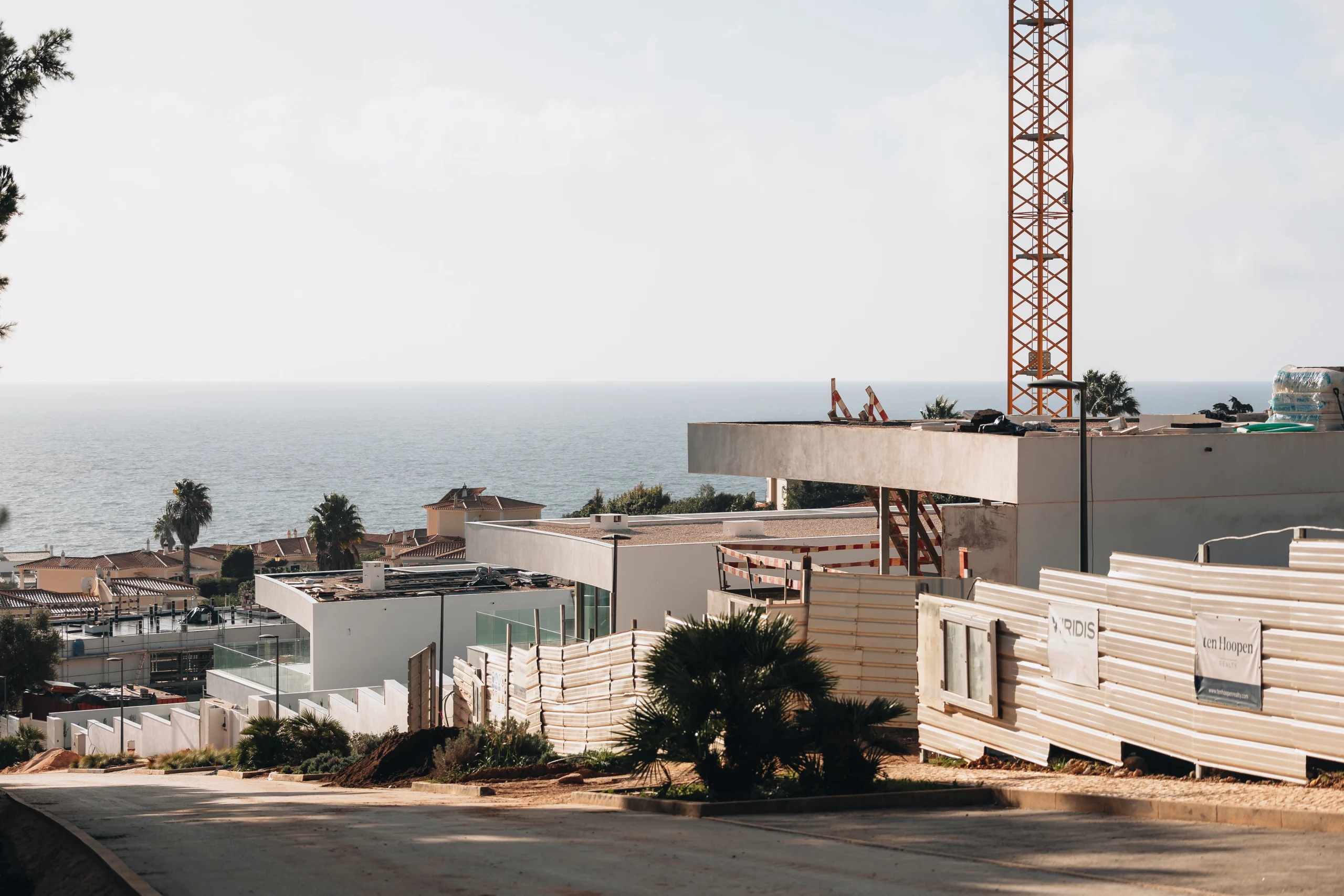
Search trends for Portuguese mortgage non-resident, Lagos property mortgage and Portuguese mortgage for UK buyers have moved up steadily across 2025 and into 2026. The interest is matched by a clutch of recurring misconceptions in conversations with buyers visiting Lagos, particularly UK, US, Dutch and German buyers researching their first Algarve purchase. This piece sets out what is actually available, on what terms, and where the friction points sit.
1. The International Buyers Cannot Get a Portuguese Mortgage Myth
Most international buyers arrive at the first meeting assuming Portuguese banks will not lend to non-residents. They will.
- Portuguese banks have been lending to non-resident buyers for over a decade.
- A NIF (Número de Identificação Fiscal) is required, but Portuguese residency is not.
- Most major banks are open to UK, EU, Swiss, Canadian and many US buyers.
- Some lenders accept other nationalities subject to additional due diligence.
The underwriting is more conservative than it is for residents, but Portuguese banks have been writing non-resident mortgages for the Algarve market for years and the process is well established.
2. What LTVs Are Realistically Available
Loan to value is the area where international buyers most often have the wrong expectation.
- Non-resident LTVs in 2026 sit at 60 to 70 per cent of the lower of purchase price or bank valuation.
- A strong financial profile with a Portuguese deposit account can occasionally push the LTV to 75 per cent in stronger cases.
- A typical Lagos deposit requirement for a non-resident is therefore 30 to 40 per cent of the purchase price.
- Banks will use their own valuation, not the asking price, when calculating LTV. The valuation can come in below the asking price and reduce the loan accordingly.
On a €600,000 Lagos apartment, the typical non-resident buyer should plan for €180,000 to €240,000 in deposit, plus another 8 to 12 per cent for taxes and fees.
3. Current Interest Rates and Product Structures
Rates have moved with Euribor through 2025 and 2026.
- Variable rate products: Euribor-linked variable products plus a bank spread of 0.9 to 1.5 per cent
- Fixed rate products: typically 3.7 to 4.5 per cent for 5 to 10 year fixed terms.
- Mixed products: an initial fixed period of 3 to 5 years followed by reversion to variable, often the most popular structure for international buyers.
The Banco de Portugal publishes regular data on average new mortgage pricing, and the gap between the best non-resident rate and the best resident rate has narrowed in 2026 to roughly 30 basis points.
4. Documents Portuguese Banks Want to See
The documentation requirement is broader than for a domestic UK mortgage.
- Passport and NIF.
- Proof of address in country of residence.
- Two years of tax returns and accounts (self-employed) or three months of payslips (employed).
- Three to six months of bank statements showing income and savings.
- A credit report from the buyer’s country of residence.
- Proof of source of funds for the deposit.
Most banks expect a full application pack before issuing a binding offer, and the timeline from application to offer is typically four to six weeks. Buyers who arrive in Lagos with their pack already prepared move noticeably faster through the process.
5. The IMT and Cost Stack Buyers Sometimes Underestimate
Portugal introduced a new 7.5 per cent flat IMT framework for many non-resident residential purchases in 2026, replacing the previous progressive structure in a large number of cases. Certain exemptions and refund mechanisms may apply, particularly where buyers become Portuguese tax residents within a specified period or place the property into qualifying long-term rental use. The total transaction cost stack on top of the purchase price typically runs as follows.
- IMT: commonly 7.5 per cent for many non-resident residential purchases, subject to property use and buyer status.
- Stamp duty on the purchase (Imposto do Selo): 0.8 per cent of the purchase price.
- Stamp duty on the mortgage: 0.6 per cent of the loan amount for terms over five years, 0.5 per cent for shorter terms.
- Notary and registration fees: approximately €1,000 to €2,000.
- Legal fees: 1 to 1.5 per cent of purchase price.
- Bank fees and life insurance set-up: €500 to €1,500.
For a €600,000 purchase financed with a €420,000 mortgage over twenty-five years, this stack typically adds €60,000 to €65,000 on top of the purchase price. A clear view of the broader cost of living in Lagos and the Algarve in 2026 often pushes buyers to revise their target purchase price downward once they see the full ongoing picture.
6. Which Lenders Are Actually Active in Lagos
The Portuguese banks most active with non-resident buyers in Lagos are listed below.
- Millennium BCP, with a longstanding non-resident desk.
- Santander Portugal.
- Novo Banco.
- BPI.
- Bankinter Portugal.
Brokers based in Lagos and Faro can often compare pricing across multiple lenders. The annual holding costs of Lagos property that overseas owners should plan for typically include life insurance bundled with the mortgage, which is a Portuguese norm that surprises some international buyers.
The Reality of Lagos Mortgages for International Buyers in 2026
Mortgages are available. They are not as cheap as Portuguese resident mortgages, the LTVs are tighter, and the documentation list is longer, but the route is operating well and the underwriting timelines are reasonable for buyers who arrive prepared.
The two factors that decide whether the process runs cleanly are the quality of the broker and the completeness of the buyer’s documentation. A prepared buyer with the full pack and a clear understanding of IMT and ancillary costs usually completes to their original timeline. A buyer arriving with a UK-style turnaround expectation and a partial documentation set usually ends up paused for several weeks while Lisbon underwriting works through the gaps.
If you are exploring a Lagos property purchase and would like an introduction to the mortgage brokers and bankers we work with regularly, please get in touch.