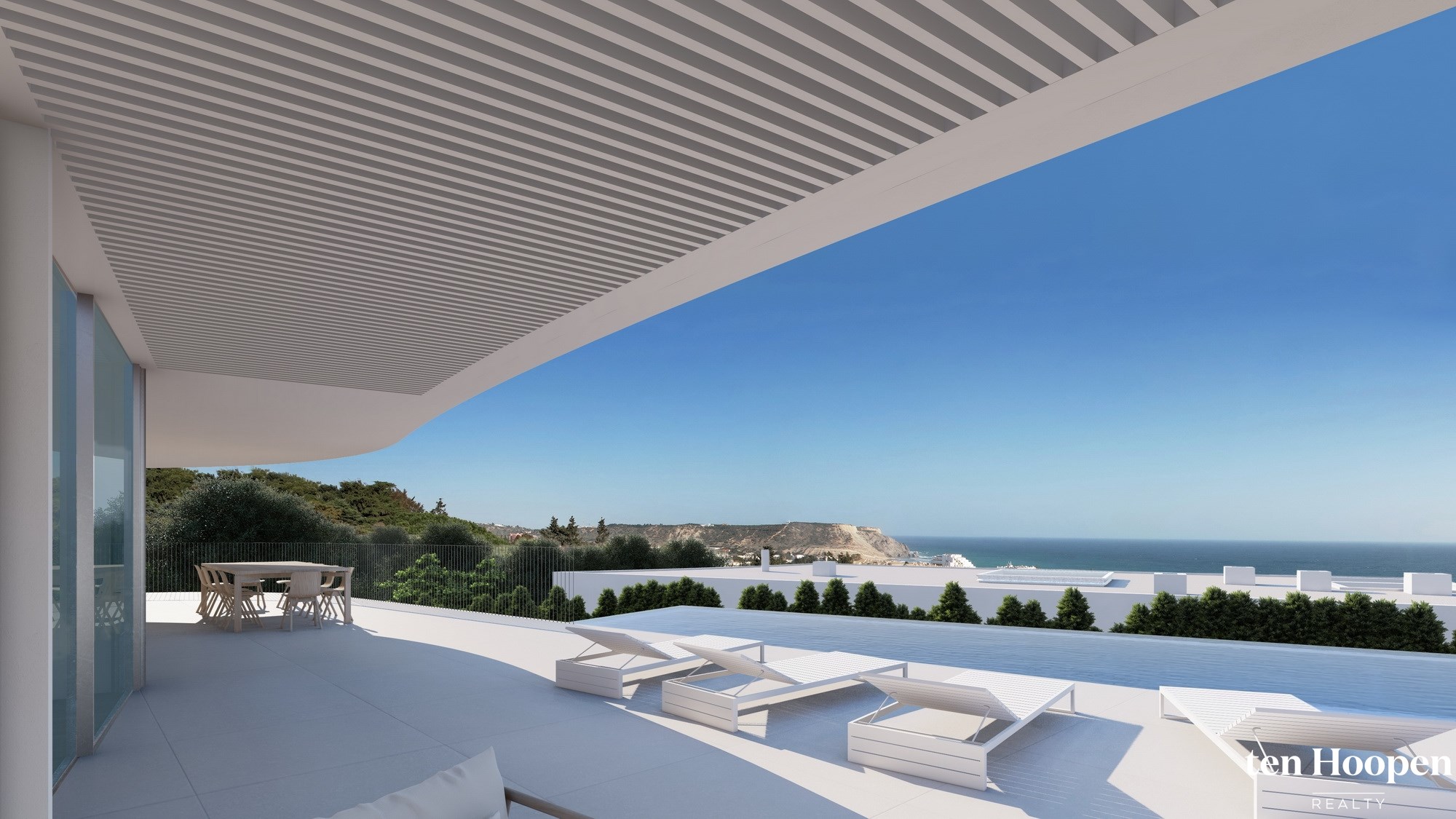
A rural quinta in the hills behind Lagos is a very different purchase from an apartment in the town. The appeal is space, a well, olive and carob trees and a slower pace in villages such as Barao de Sao Joao, Bensafrim and the Odiaxere countryside, or higher up in the Serra de Monchique foothills. The technical side is where these deals tend to succeed or fall apart. This guide sets out what buying a country property with land around Lagos involves in 2026, and the checks that protect you before you commit.
1. Rustic Land and What You Can Build
The first thing to establish is how the land is classified. Portuguese plots are recorded as either urbano (urban) or rustico (rustic), and that classification governs what you may do with them far more than the asking price does. Rustic land cannot freely be built on, and many rural plots carry a small urban article for an existing house sitting within a much larger rustic parcel.
- Urban land carries building rights set by the municipal plan, the PDM
- Rustic land is for agriculture or forestry and allows only limited agricultural structures
- A quinta is often one rustic article plus a separate urban article for the dwelling
- The Land Law of 2024, amended in 2025, lets councils reclassify rustic land for housing only under narrow conditions, so never assume it
2. The REN and RAN Reserves That Restrict Construction
Two national reserves overlay large parts of the rural western Algarve and restrict building further still. The Reserva Ecologica Nacional, the REN, protects sensitive land such as slopes, watercourses and coastal strips, while the Reserva Agricola Nacional, the RAN, protects the better farmland. A plot can look buildable and still sit inside one of these reserves. Parts of the Monchique foothills also fall within areas overseen by the Institute for Nature Conservation and Forests.
- REN land severely limits construction, earthworks and even fencing in some cases
- RAN land is reserved for agriculture and rarely permits a new dwelling
- Both reserves are mapped in the municipal plan and shown on the plot survey
- Confirm the reserves apply before you offer, not after
3. Checking the House Is Legally Registered
A rural property carries two separate records, and both must agree with what stands on the ground. The caderneta predial at the tax office describes the property and its areas, while the registo predial at the land registry confirms ownership and any charges. Older quintas often have unlicensed extensions or a barn converted without permission, so the paperwork and the building do not always match.
- The caderneta predial sets out the registered description and the declared areas
- The registo predial confirms clear title and shows any mortgage or lien
- The built house must match both records, square metre for square metre
- A use licence, the Habite-se, should exist for any habitable dwelling
- Since January 2024 the Ficha Tecnica is no longer required at the deed, though it remains useful to have
4. Boreholes and Water Licensing
Mains water rarely reaches a remote quinta, so most rural homes draw from a borehole, known as a furo, or an older well. Water is a practical daily issue in the western Algarve, where summers are long and dry, and it is also a legal one. A borehole must be registered and licensed with the Portuguese Environment Agency, and an unlicensed furo is a problem you inherit.
- Ask to see the abstraction licence and a recent water quality test
- Storage tanks and a pump are normal, and winter rain feeds many wells
- Check summer yield, because a well that runs in March can drop by August
- Where mains water does reach the plot, confirm the connection and the meter
5. Septic Systems and Off Grid Services
Drainage, power and connectivity follow the same pattern as water, in that a rural quinta is often partly off grid. Few country plots connect to a mains sewer, so waste goes to a septic tank, and the other services vary sharply from one valley to the next.
- Drainage is usually a septic tank, a fossa, rather than a mains sewer
- Check the tank size, its condition and its distance from any borehole
- Confirm whether the plot has a mains electricity connection or runs on solar
- Mobile coverage and fixed internet differ hugely between hillside valleys
6. Access Tracks and Rights of Way
Getting to the property is a question in its own right. Many quintas are reached by unsurfaced tracks that cross neighbouring land, and the legal basis for that access matters as much as its condition. A track you use on a viewing in September can behave very differently after winter rain.
- A right of way, a servidao de passagem, should be recorded on the title
- Establish who is responsible for maintaining the track and sharing the cost
- Walk the full route in, not just the final approach to the house
- Check winter access, as some tracks flood or wash out in heavy rain
7. Renovation and Running Realities
The classification that governs building rights also governs restoration. Bringing a ruin back to life on rustic land usually means rebuilding within the existing footprint rather than expanding at will, and running a rural property is a steady commitment once the keys change hands.
- Restoration on rustic land is normally held to the original footprint and volume
- Annual IMI on rustic land runs around 0.8 per cent of its rateable value
- Owners must clear vegetation around buildings each year under fire management rules
- Budget for ongoing land upkeep, from olive groves and terraces to firebreaks
8. Price Bands as Our Own Reading
Rural values do not follow a simple rate per square metre the way town flats do, because a quinta is priced on its land, its legal status and its services as much as its floor area. For context, our own reading puts well located stock in Lagos town around €4,500 to €4,600 per square metre in 2026. The rural bands below are the agency's own reading of the country segment rather than a formal valuation, and individual plots vary widely.
- Ruins and rustic plots to restore from roughly €150,000, depending on viability
- Habitable quintas with land commonly €500,000 to €1.2 million
- A fully legal, connected and move in quinta carrying a clear premium
- Remote plots with water and access issues trading well below the headline
The Reality of Buying a Rural Quinta Around Lagos
A rural quinta rewards the buyer who does the technical work upfront. The land classification, the reserves, the water licence, the drainage and the access all shape what the property is worth, and each can be verified before you sign. The legal due diligence sits with your own lawyer, and a proper survey of the plot and its boundaries is money well spent on a country property.
Prices for rural homes here have held firm because habitable, fully legal quintas are scarce, and demand from Dutch, German, British, French and Belgian buyers stays steady. If you are weighing Lagos property for sale with a bit of land, or looking at Algarve property for sale more widely across the western coast, we can shortlist rural homes against your brief, flag the classification and reserve issues early, and arrange viewings around a single trip. Speak to our Lagos office to begin that search.